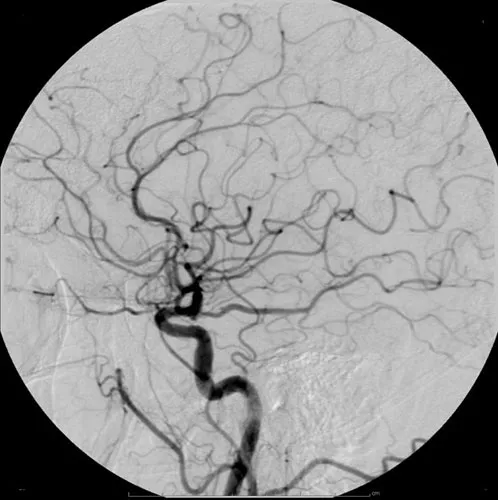
CT Angiography (CTA) shows blood vessels in detail using a contrast injection into an arm vein and a fast CT scan. It avoids inserting a catheter into the artery and gives 3D pictures of the vessels.
Common CT angiography studies
- CT cerebral angiography & venography — aneurysm, stroke, AVM
- CT carotid / neck angiography
- CT pulmonary angiography — pulmonary embolism
- CT aortography — aneurysm, dissection
- CT renal and mesenteric angiography
- CT peripheral angiography of the legs and arms — blockages, claudication, diabetic foot
Preparation
- 4–6 hours fasting.
- Recent serum creatinine report (kidney function).
- Inform us about contrast allergy, asthma, metformin or pregnancy.
Frequently asked questions about CT Angiography
Is CT angiography the same as conventional angiography?
No. CT angiography is non-invasive — contrast is given through a vein in the arm. Conventional (DSA) angiography uses a catheter in the artery and is used when treatment may be needed at the same sitting.
How long does CT angiography take?
The scan takes a few minutes; plan for about an hour at the centre including preparation.
Page reviewed by the radiology team at Kansal Diagnostic Centre · Updated October 2026